2020
Fresh Consulting
Team Nation
Gamifying the Playbook

Overview
Team Nation is a gamified learning platform that turns a coach's playbook, film, and teaching points into interactive mobile games, helping athletes absorb plays faster and hold onto them longer. It lives where education, sports, and technology meet, complementing film tools like Hudl by turning static instruction into challenge-based learning that players actually enjoy.
The Problem
Coaches know their playbooks inside and out, but players struggle to turn that knowledge into instinct. Traditional team meetings, film sessions, and printed play sheets weren't holding younger athletes' attention, and they weren't improving how much players retained.
It all came down to one question:
"How do you get a coach's football IQ from their head to their players' feet?"
My Role
As the UI/UX Designer, I owned every phase of the design process:
Interviewing stakeholders and translating coaching workflows into game-like interactions
Designing user flows, wireframes, prototypes, and high-fidelity mockups
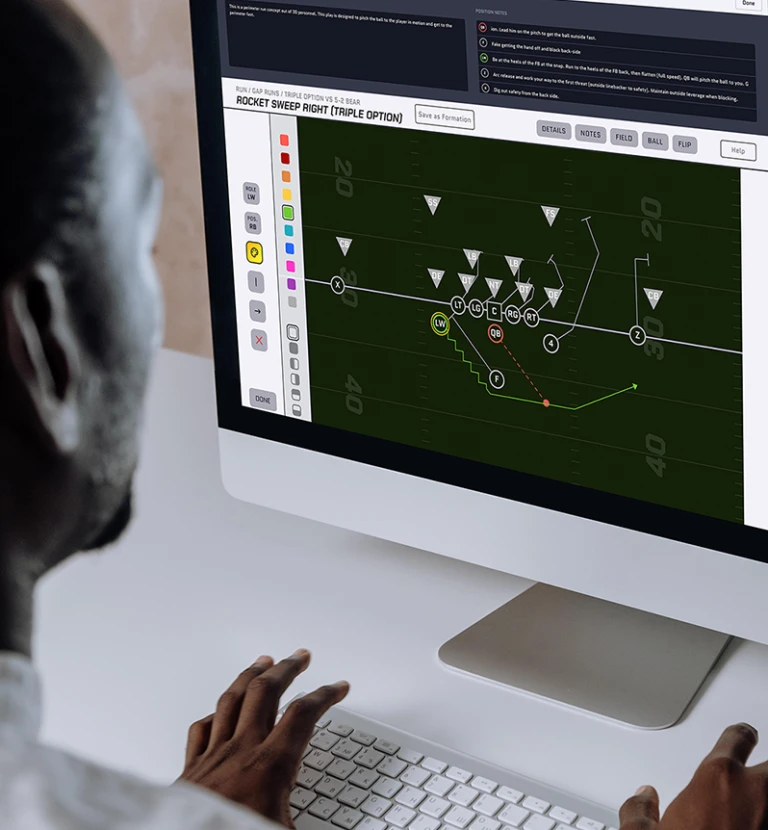
Designing the player and coach dashboards for both mobile and web
Prototyping the micro-interactions that motivate without distracting
Partnering with developers and product owners to keep the build true to the design
Design Approach
Game-inspired UI: sports-style typography, bold contrast, and intuitive icons that stay polished without losing their playfulness.
Cognitive clarity: visual hierarchy, chunked content, and contextual cues that make complex play diagrams easy to parse.
Motivational loops: progress bars, badges, and quick feedback that keep athletes coming back to train their minds the way they train their bodies.
Research & Discovery
Before designing screens, I needed to understand both sides of the whistle, so I interviewed stakeholders and studied how coaches teach and how players learn. Those conversations became the foundation for two personas, each a real side of the same loop:
Marcus, the Coach. Lives in the playbook but has only a few hours a week to teach it; he needs to install his game plan fast, reach phone-first players, and know who's actually ready before kickoff.
Jaylen, the Player. Competitive and mobile-native; he'll grind a game on his phone for hours but tunes out a printed playbook, so he needs to learn his assignments in a way that feels like the games he already plays.
Designing for both at once meant the product had to serve a teacher and a student inside the same loop, and that balance became the throughline for every decision I made.

The Solution
Games.
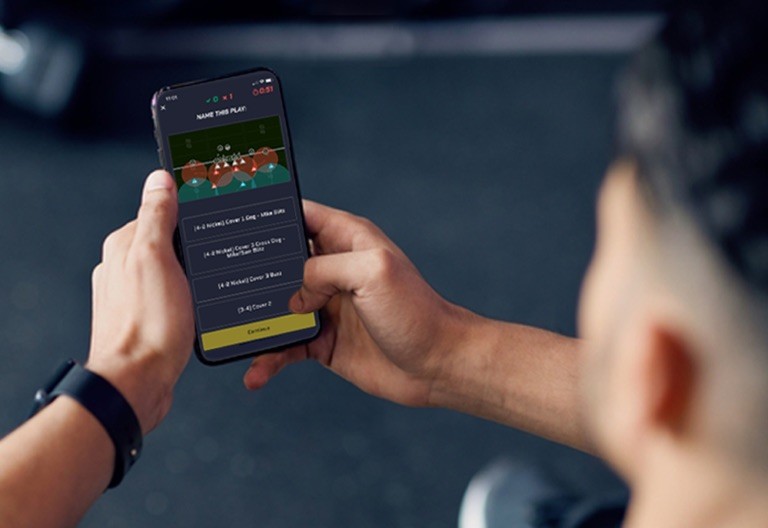
Team Nation turns studying into play. I designed a system that converts play cards, images, and video into bite-sized mobile games and quizzes, so players master their assignments by playing instead of by sitting through another meeting.
On the coach side, I designed the tools to:
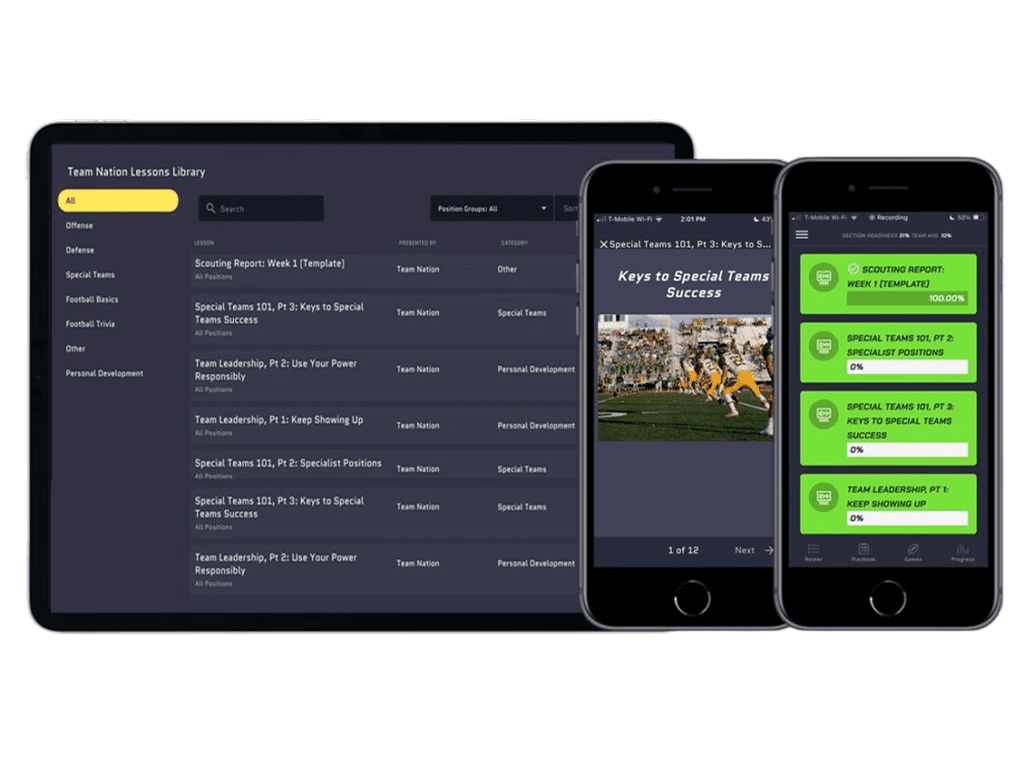
Upload scouting reports, installs, and team trivia
Build lessons, or import them from a shared content library
Push learning straight to players' phones
Track comprehension through analytics
I grounded the work in research showing that challenge-based gamification can lift learning performance by as much as 90%, and shaped every quiz and reward to put that effect to work.
The Learning Loop
The hardest part wasn't turning a play into a quiz; it was making players want to come back for the next one. So I focused on the loop: study, get tested, see progress, earn a reward, repeat.
Progress bars showed how much of an install a player had mastered. Badges marked milestones worth chasing. Fast, clear feedback told players exactly where they stood the moment they answered, the same rhythm that makes mobile games hard to put down. The goal was simple: get athletes to train their minds with the habit and intensity they already bring to training their bodies.
Impact
The platform found real traction. Team Nation reached more than 12,000 users across all 50 states and 5 countries, with over 5 million playbook questions answered through the games and quizzes I designed. Coaches reported sharper mental reps and more confident execution on the field, the exact behavior change the project set out to create.
It earned endorsements from the top of the game, too. An NFL veteran credited the platform with closing a gap even pro players have, since few know an entire playbook, and a Division I head coach pointed to its gamification as the thing that finally let his staff measure comprehension and confirm players were game-ready.
Reflection
Team Nation was about turning information into intuition, taking something as dense as a football playbook and making it stick the way real learning should. It reminded me that engagement isn't decoration: when you design the right loop, people choose to learn, and that choice is where retention actually comes from.